Writing The Unthinkable
The most interesting aspect of art and writing in our time is a collective inability to write about bolts of trauma. The deconstruction and exploration of broader concepts such as narcissistic parents or toxic family relationships or even generational traumas is ubiquitous in fiction right now, but as a group of creatives, we’ve almost all decided collectively that a short-term jolt isn’t worth that same deconstruction. Archive of Our Own (Ao3) is host to some of the most honest and, more importantly, open and free fiction works that provide insight into aspects of our cultural understanding of the world we live in as it happens in real time. We explore our difficult emotions about our hopes and, even more poignant, our fears through fiction which allows for a safe place to pick apart complex knots of thoughts and feelings.
An example of this is the COVID-19 pandemic, a sudden cosmic shift in the collective history of our generation and yet so wildly impactful and close that there’s a natural dearth of fictional recollection, almost as though everyone who survived it hopes only to forget it. This same thing happened among those who lived through other major historical seismic events (the Holocaust comes to mind, as does 9/11). Right now, Ao3 has approximately 16.5 million fanworks and somewhere around 8 million registered users, but only 4,797 works of those 16.5 million have a tag connecting them to the COVID-19 pandemic. Only 1,635 have a tag designating them as relating specifically to the COVID-19 lockdown despite that lockdown would be a great setting for several other major and trendy fictional tropes such as “Only One Bed” or “Forced Proximity.”
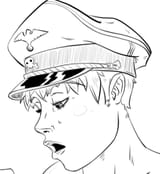
This unwillingness to discuss “current” events in fiction is sort of infuriating for those of us who want to look into the eyes of something terrifying that has had a real impact on our daily lives and our personal histories. The only real solution to the deconstruction of those fears is in writing these things ourselves and picking through our own misgivings and what terrifies us about events with which we form complex relationships in our emotional memory. 9/11, which only has around 1000 works connected to it on the Archive, is an event that quite a few popular mainstream authors have dissected in their works, including Stephen King whose poignant short story “The Things They Left Behind” examines the complicated human element of circumstantial survival and the psychological impact of a sudden cultural rupture. Why, then, are people who experienced 9/11 at a formative age and have bizarre and traumatic responses to footage or stories not exploring them? Will we see what we saw with the Stalag fiction of the 1970s? Will the generations after our own finally become the brave souls who can peer back into history and form storylines around our lived experiences?
Maybe it’s just that fan writers have an aversion to major tragedy. After all, even the Holocaust has only around 1000 works though “World War II” has over 15,000, a far more respectable number and likely having at least a mention of the genocide within the text. The Union Carbide Bhopal disaster which is considered the most devastating industrial incident of all time has 0 fics, the sinking of the Wilhelm Gustloff similarly has 0, and outside of the Chernobyl miniseries fandom (a total of 877 fics in the whole of that fandom, by the way) there are very few fics exploring that particular setting as well. We should, I suppose, also take into account the social stigma of having included “unthinkable” events into a relatively unserious environment (such as fandom) as we’ve seen authors in the past berated for simply tagging their thoughtful examinations of these topics accurately. “Why would you write about this?” is a common phrase on TikTok, further cementing the social ostracization of emotionally intelligent individuals in fandom spaces who are attracted to this type of discovery and deconstruction.
More acceptable topics are closer to personal histories and have more to do with family dynamics, friendships, romantic relationships, and grappling with sexuality. These are not necessarily low-stakes or low-impact, as they can include major personal events such as sexual assault, a myriad of abuses, and unspeakable violence, but they seem to stop short of commentary on political issues. Abortion (14,646 works), Police Brutality (3,102), and even just unspecified Protests (1,143) tend to have less fics than topics such as Child Abuse (293,540), Rape and Sexual Assault (378,646 and 60,066 respectively), and Internalized Homophobia (88,318), leading one to extrapolate that because Ao3 is a global fanworks site despite being based in New York, works are naturally going to conform to broader aspects of the human condition.
On the other hand, I might be looking at this too directly. After all, it’s commonly known that humans are so complicated that often they will not look at something in the face in order to grapple with it, choosing instead to come at an issue from an obscure angle. Folks who are trying to tough out their complex feelings around issues regarding “transness” and other gender/sexuality questions may not write about trans issues directly and will instead obfuscate with Omegaverse or some kind of sci-fi/fantasy setting that allows for a safer reflective surface to gaze upon the gorgon of their fears. Things like this are seen often enough in main stream media and sometimes they’re just about right on the nose as Omegaverse is to transness. Annihilation (2018), for example, is a sci-fi Hero’s Journey delving into the layers of personal and societal responses to cancer whether you succumb or survive. Is cancer a major aspect of the film? No, not really. Is the movie about cancer? Absolutely. It’s very possible that folks really are processing their feelings about stuff like 9/11 or COVID and are simply going about it in a more abstract fashion. Some might not even know that those are the emotions they’re processing as they’re writing about their favorite characters coming to grips with vague grief or survivor’s guilt in the wake of some major tragedy. Not only is this approach “safer” in an emotional approach, it’s also safer in terms of social backlash, avoiding third rail topics that might catch us on the outs within circles of folks who are also not ready or willing to stare directly into the abyss.
One day, writing about COVID-19 might be, in itself, an obfuscation for a different, more recent terror faced by the children of our children in the same way that World War II has become a setting by which one can remove oneself from current events. Distance, after all, makes the heart grow fonder, and there is no more solid distance than time, it seems. As the children and grandchildren of those in concentration camps wrote lurid fantasies about their generational traumas as they imagined them in order to reclaim narrative control, perhaps one day our current misery will be reclaimed and repurposed—newspapers folded into artful little origami cranes and flowers, allowing for the horror of our reality to gently fold over and mask the horror of theirs.