The Sinners Fandom and the Common White Attraction to a Gross Little Man
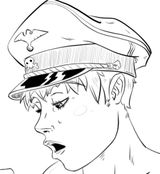
[This newsletter contains spoilers for Ryan Coogler’s 2025 film Sinners]
Recently, there has been discourse on the Ao3 subreddit regarding the number of fanfictions featuring the vampire villain Remmick and how they outweigh the number of fics surrounding the primarily Black cast of the film. If you’re anything like me, your face scrunched up and you inadvertently said aloud: “Ew.” But…is it racism behind this discrepancy? Do white authors go out of their way not to write Black characters out of some maliciousness? Do authors choose this sweaty little vampire because of the rejection of objectively better-looking Black actors/actresses simply because of their Blackness? Some, yes. There’s no getting around that. Others use the argument that they’re “insecure” about writing Black characters (ok whatever, coward). But much of it is because Remmick is on some level relatable to them.
Hear me out.
Ryan Coogler’s Sinners was an ambitious piece of media staring Miles Caton, Michael B. Jordan, Hailee Steinfeld, Wunmi Mosaku, and Jayme Lawson as well as a plethora of other wildly skilled actors and actresses who poured their talent into the production. The plot follows a young Sammie (Caton) whose cousins, the well-traveled twins Smoke and Stack (Jordan), have returned from Chicago after having spent several years there working for organized crime after their service in the first world war. Worldly and jaded, they come back to their rural stomping grounds and go about recruiting their community to make a juke joint. Sammie, riding along for the adventure of it all and happy enough to have an excuse to utilize his true talent for the blues (to the chagrin of his preacher man father), is carried away by their enthusiasm and later finds his true calling and connection to his ancestry through music, able to finally share and celebrate it with a crowd of people who can understand both it and him on a deep, spiritual level.
Sammie’s music is seen as a bridge of sorts that can cross time, space, and meta-physical planes in order to recapture and regain the connection of Black cultures to their ancestors, calling forth a spiritual awakening that can be shared across all languages and transcend beyond the oppression that afflicts those in the material realm. Because Black cultures and traditions were fundamentally stripped away by the commodification of Black bodies during the slave trade, American Black spiritualism is often tied to the small tidbits of what was able to survive such inhospitable circumstances. In this way, Coogler celebrates the resiliency of Black spiritualism and identity, highlighting that no matter what, their communities have been born to survive and thrive in their own ways even when the powers that be have sought to degrade them.
In fact, the film highlights the ways that a proximity to power, that is, a proximity to whiteness, is almost a toxin that can degrade those community connections. That Mary, the only white-passing Black character, is the first to succumb to the vampire Remmick from our main cast is not an accident, as her ability (and knowledge of that ability) to appeal to white sensibilities is what allows her to be devoured.
So here’s where we get into Remmick’s character, played by Englishman Jack O’Connell. We’re introduced to him as he is chased through the wilderness by wise indigenous men who are treated with suspicion by white farmers who’ve taken him in due to his sorry state and his ability to appeal to their “better” nature. From this point on, they are his thralls and he finds himself attracted to the juke joint on a supernatural level, drawn to the celebration of culture and its breaching of the barrier into the spiritual realm through Sammie’s musical gifts. Like a moth to the flame, he flutters into their orbit but as a vampire he cannot come into the juke joint without an invitation (hence the victimization of Mary as his “in”). I won’t go into the rest of the film’s details here, but Remmick’s vampire is specifically determined to be Irish which is an incredibly poignant choice by Coogler as the Irish were similarly victimized by colonialism (their lands stolen, their families starved and murdered, their bodies shipped as commodities to penal colonies for labor) but their whiteness transformed much of their experiences into something fundamentally different to the Black experience and their proximity to whiteness in America was able to strip not just their heritage from them but their ability to access that heritage.
The average white mutt American who’s one quarter Irish will be able to trace their heritage to some poor, dirty little Irishman who came through Ellis Island back in the day but a piece of yellowing paper scanned into ancestry dot com is a cold comfort when compared to the witnessed joys of Black community and cohesion shared through survival and a spiritual connection through cultural music, meals, language and concepts only familiar to those who share in something utterly unique. Whiteness as a toxin, as an acid, that eats through cultural connections for its own supremacy can try as hard as it can but it will not willingly be invited in to eat away at the fundamental pillars of Black joy the way it has happily infiltrated and eroded the cultures and connections of its white victims. As a crucible, white supremacy seeks to burn away everything except whiteness and with the Irish and other white-passing ethnicities, it has overwhelmingly succeeded, cutting away and disconnecting them from long-lasting community ties and ancestral spiritualism in exchange for the power that comes with embracing it.
For marginalized people who were treated as vermin in their previous lives, the promise of power in trade for one’s history is a nearly irresistible draw and it has swallowed nearly every single white-passing demographic that has come to America. Coogler’s personification of the desperation this creates in the lost generations of those heritages is Remmick, the Irish vampire who can no longer find his way back to his ancestors because of the sickness that has consumed him. His anguish and his madness and his hunger for that connection manifests as violence against people who can access the euphoria of creating and maintaining those precious threads to the past. The Irish, the Polish, white-passing Italians, etc., etc., have been swallowed into the system and victimized again, though this time it is in becoming puppets of white power, developing a yearning for connection that cannot come from the communities they’ve found themselves in today as they are superficial and spiritually threadless.
The unknowing transformation of poor immigrant whites into blood-thirsty monstrosities set by the powers-that-be against the enemies of whiteness (Black/Brown cultures and communities) is part of the process to our systemic institutions of white supremacy. Those immigrants are victims that become perpetrators. It is a cycle of evil that is brilliantly depicted in the metaphors of Sinners and, when reflected on a larger and less supernatural scale, explains a lot of the tensions between poor whites and poor Blacks especially in out of the way and rural places across America. The disconnect that many whites have with their heritage forces them to manufacture heritage in places that make little sense to the rest of us (the Confederacy, for example), and fosters a bitterness toward those who exist outside of whiteness and seem happy enough to do so (something they are fundamentally unable to do). Whites who have been victimized by white supremacy both know on some level that they they’re harmed by it but also that by this point it is inescapable and they’re doomed to die within it without ever reconnecting with the parts of themselves that were stolen by it.
This makes Remmick not just a tragic character but a sympathetic one. Fandom doesn’t make Remmick sympathetic, he already was within the narrative. He tells Sammie of the men who stole the land of his fathers and gave them lies that brought them warmth and comfort. He lies then himself to Sammie and claims that they can be one and share in commune with each other if only Sammie would give him his gifts whether willingly or not. He seeks to find connection through violence if he cannot have it through redemption and the sunrise—the truth—destroys him instead. Everyone he turned who remains in the sunlight, everyone he harmed in the wake of his hunger, vanishes into nothing; becoming more of the countless unsung martyrs of this cycle of violence and this perverted hunger wrought by the crucible. The unimaginable tragedy of Remmick and the tragedy he wrecks upon those around him was enough to drive me, personally, to tears in the theater but I still don’t identify with him.
Why not? Well, because I don’t have a single ounce of marginalized blood in me at all. (Do I even have a soul?) I can sympathize with him but his character doesn’t resonate with me. This is one of the reasons I have a really difficult time understanding attraction to his character and the impulse to write him. He doesn’t inspire in me the kind of large and unwieldy emotions that he evokes from people who do have those heritages and who were essentially stolen from those threads and find themselves lost without connection to their past. The connections they do have are to stark, cold whiteness and sometimes the impersonal, conditional love they find in the religions of oppression. Their spiritual past was given away by their most recent ancestors for the safety that the label of “white” could provide and it hurts. And Hurt People hurt people. The cycle has been maintained by desperate actions taken by desperate people over a century ago and the ramifications of those actions in the invisible traumas experienced by their progeny today.
This is why white fandom writers from Irish-American or other (former) marginalized white identities probably write Remmick. Because they don’t know what to do with these complicated thoughts and emotions. They’re hurt and they’ve never had a vehicle that has expressed that hurt in this particular way before him. This may or may not be reflected in the rambling odd sexual writings that we see on Ao3 because we can’t expect young white women to scrape up enough emotional intelligence and self-awareness to recognize their sexualization of generational traumas. After all, the examination of kink is a really deep and difficult process and it can end up being incredibly messy and disorganized when you come right down to it.
Nevertheless, the complaints that “Remmick has more fanfiction than any other character in Sinners” can be explained by the fact that fandom is predominantly white and American, many of whom are young writers who find something of themselves amidst the same kind of generational harm that this vampire represents.
So yes.
The answer is: “It’s racism.” But…in an extremely round-about kind of way and not likely malicious, as is typically the case when it comes to these kinds of things. I think the best thing we can take from this situation is a deeper understanding of why fanfiction exists in the first place: it’s a sloppy and disjointed and fundamentally flawed medium by which mostly young women (but not all, obviously) explore their relationships with their world. It can’t be perfect and it never will be because people aren’t perfect and we’re not nice and neat and orderly and always explainable in the simplest of terms. We’re complicated and stupid and messy and awful most of the time but that’s what makes us human. Fanfiction has created a space for people to work through some of the weirdest and most complex concepts to allow for a greater awareness of self. It doesn’t always pan out quite right, and it’s a strange little experiment, but it’s what we’ve got right now.
My advice to white fanfic authors? Write Black characters. Get called racist. Do better. At the very least: Try. Also…write your gross sweaty little man, I guess. But think about what I’ve said as you do it…and explore what that might mean for you. Stop being afraid of the word “racist” and start thinking about how you’re going to move forward and accept that you are racist because you were raised and conditioned under white supremacy. If you’re MuttWhite-American, you’re racist because your ancestors were told that they will accept their proximity to whiteness or they would die for their resistance to it and the fact that you’re here means they chose your survival over their heritage. They were told “it’s either you or them” with “them” meaning Black and Brown people and they chose themselves despite that the choice was no choice at all. That’s not your fault, but to this day you will be punished for it by the threadless existence you now must endure.
You can break this cycle. You can’t destroy it, that’s beyond any of us as individuals, but you can stop it from manifesting through you. You can work to choose the safety of our Black and Brown communities over your proximity to power. You can choose to relinquish it in the service of something greater. Because wouldn’t that be nice? Finding those threads again? Discovering something you lost before you were even born? A purpose that can connect you to something far, far larger than yourselves and your survival? Maybe there’s hope to regrow what was severed. Maybe it’s not too late to fix things.
Or at the very least: Try.